






















Is the signature genuine?
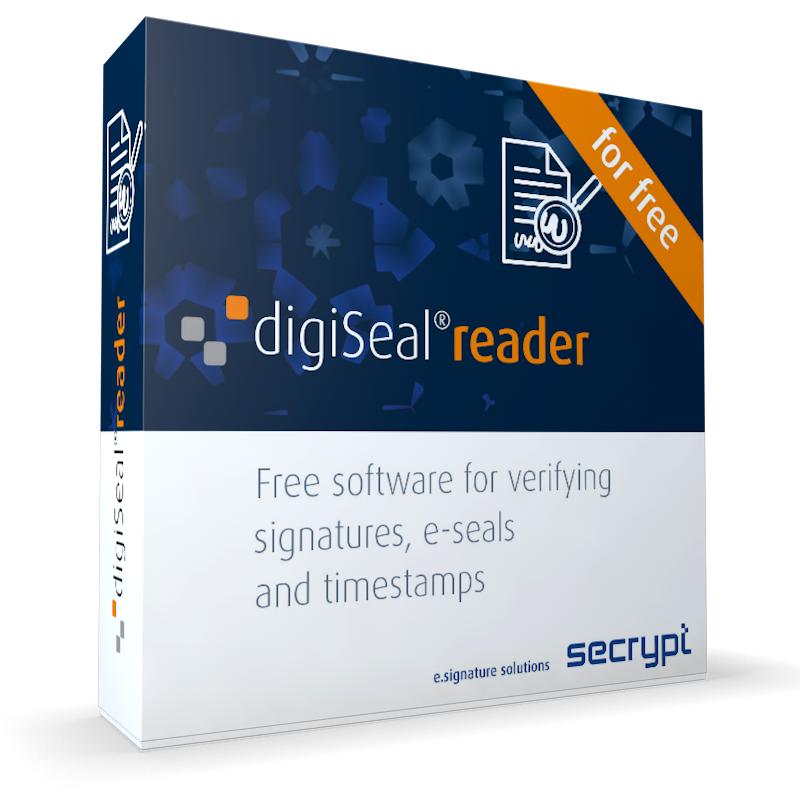
Free verification software
Including data encryption to keep snoopers at bay!
We specialise in electronic signature solutions for secure, easy and fast document workflows and offer practice-oriented and standardised client- and server-based software products.
Electronic signatures in the healthcare sector: Find out how you can work without the need for paper, economically and in a future-proof manner by using electronic signatures.
Electronic signatures are equivalent to handwritten signatures on paper documents and fulfil the same purpose. Electronic signatures enable the author or signatory to ensure the authenticity of the signed data and the integrity of the content. They provide vastly more protection against forgery than handwritten signatures and offer a tool for signing electronic documents, files and messages that is legally binding.
Using electronic signatures makes it possible to digitally streamline working processes and business transactions in which documents need to be signed, without any media discontinuity. No paper hardcopy is required for the signature since the signing is done entirely electronically.
The legal prerequisites are regulated at the European level in a corresponding EU Directive. All European Member States have national laws and ordinances based on the Directive; Germany, for example, has the Digital Signature Act (SigG) and the Digital Signature Ordinance (SigV).
The terms "digital signature" and "electronic signature" are frequently used interchangeably. However, this equivalent use is not correct. "Digital signature" is a technical term that describes a class of cryptographic (i.e. mathematical) processes. "Electronic signature", on the other hand, is a legal term that was first used by the European Commission in a revised draft of EU Directive 1999/93/EC in order to prevent the statutory provisions from being bound to a specific technology.
Electronic signatures enable secure electronic legal and business transactions to be conducted in the anonymity of the Internet and help companies and organisations organise their document workflows so that they are almost or even entirely paper-free.
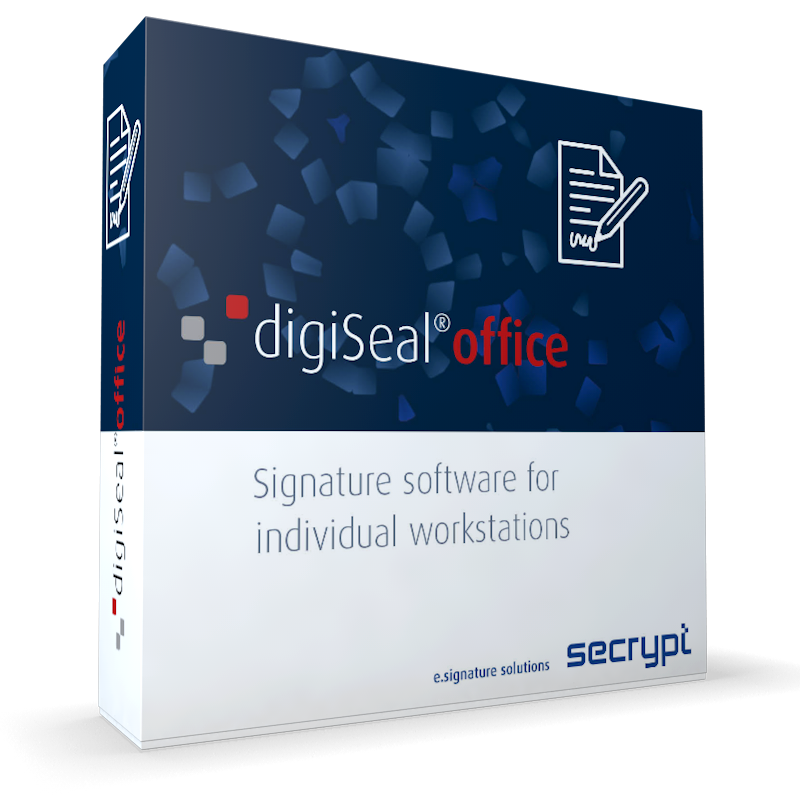
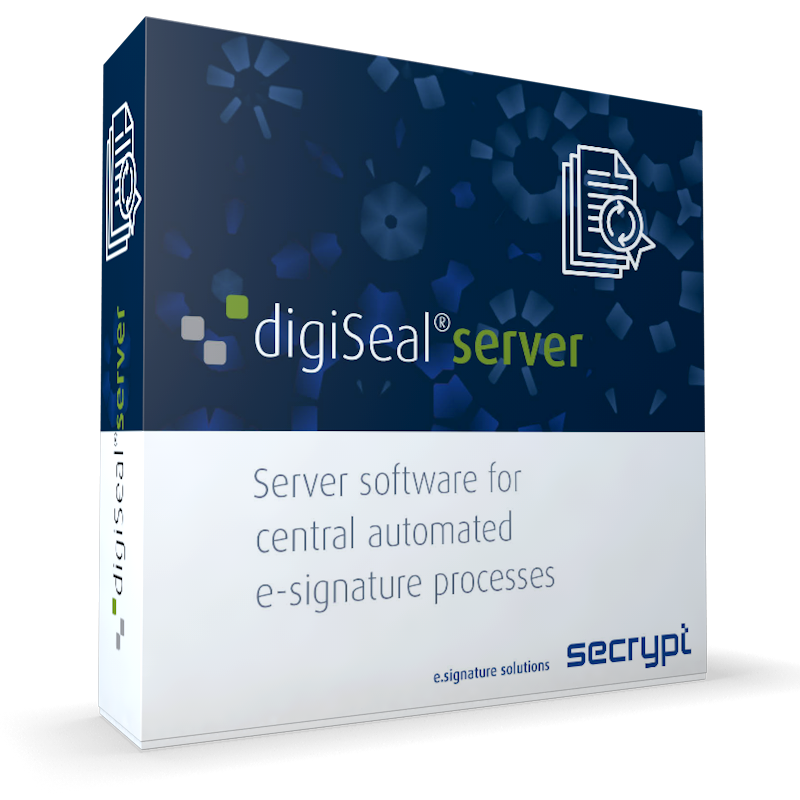
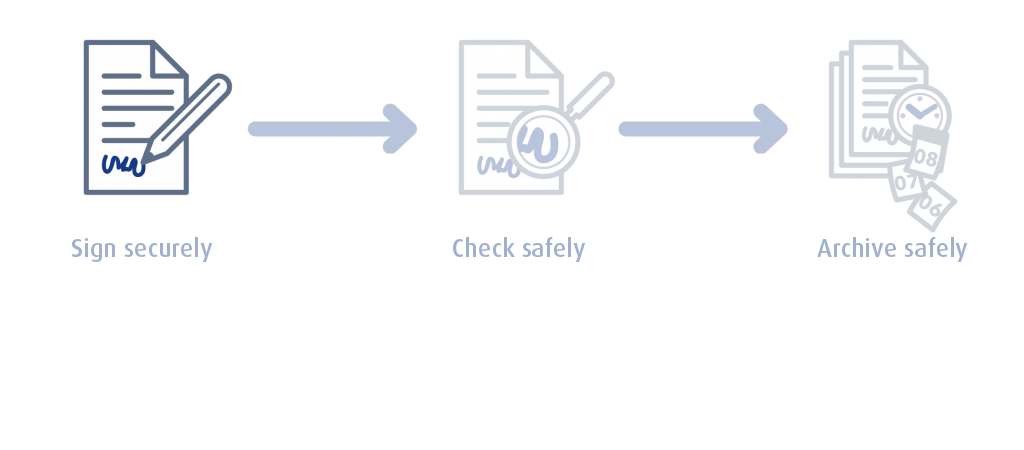
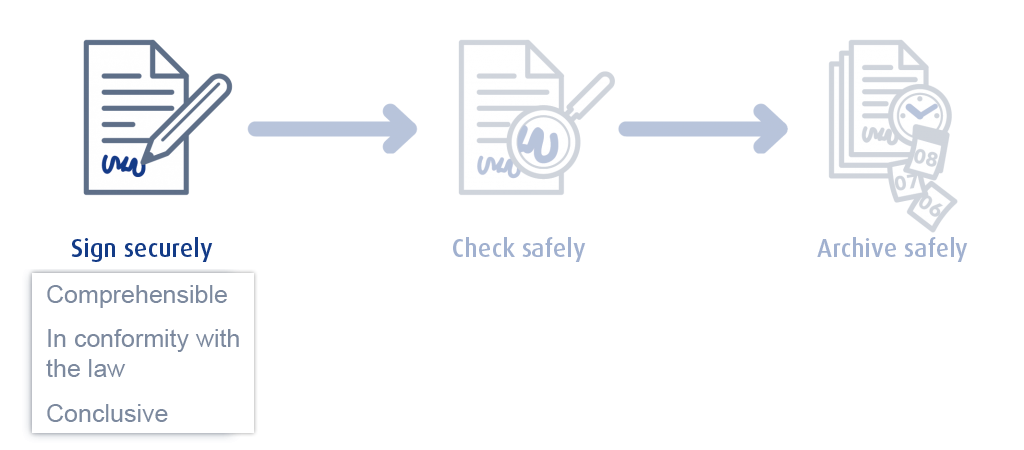
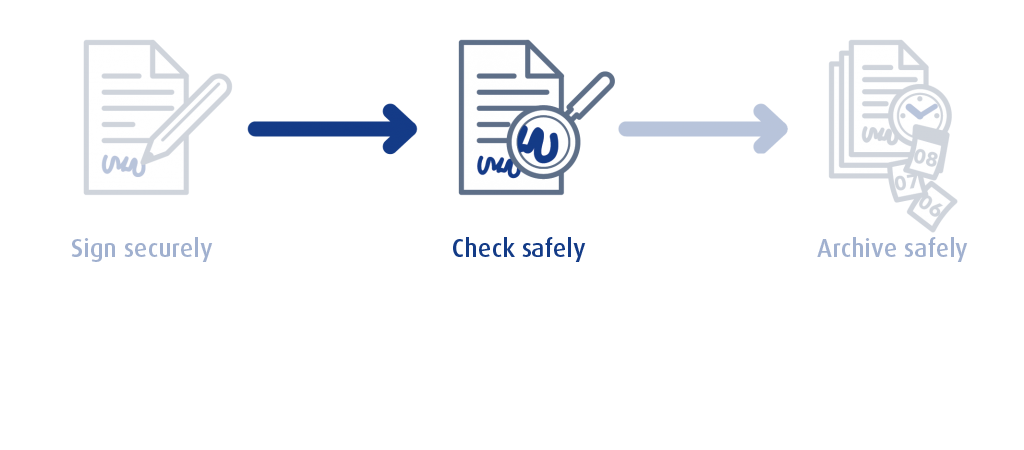
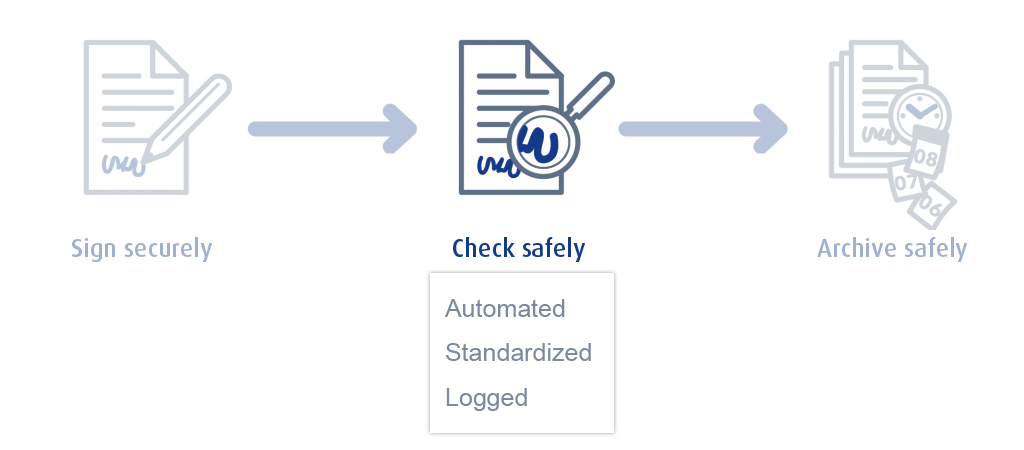
The digiSeal® range of client- and server-based software products for providing electronic signatures, timestamps and encryption ensures the authenticity, tamper resistance and confidentiality of sensitive electronic documents and their long-term probative value in electronic archives. The products comprehensively support the signature lifecycle: from generating signatures in all relevant signature formats to their verification and archiving. A worldwide unique feature of the digiSeal® range is its ability to print verifiable and legally binding hardcopies of electronically signed documents on paper.
There are different types of electronic signatures. The definitions from the European Directive have been largely adopted in the national legislations. A suitable signature type can be chosen in accordance with the required legal effect:
A substantial criterion in choosing a signature is the required probative (i.e. evidentiary) value and the associated security requirements.
If it is necessary to achieve the same probative value of a handwritten signature, so-called "qualified" electronic signatures should be used, e.g. for signing medical reports. A correspondingly signed electronic document can replace the necessary written form required by law, whereby legislators demand more stringent security requirements: the qualified signature certificate has to be stored on a signature chip card ("secure signature creation device"), which the user receives on registering with a trust centre ("certification service provider").
In order to secure internal business processes without any requirement for the written form, e.g. when initialling orders, it is sufficient to use "advanced" electronic signatures. The signature certificate can be stored on any kind of data storage medium, for example a USB flash drive or a hard drive.
There are no special requirements for "simple" electronic signatures. They occur in various versions, e.g. as scanned signatures or as contact information at the end of an email with personnel details. An essential aspect is that they do not provide any means to securely or verifiably ascertain the identity of the author and the integrity of the message. In civil processes, documents with simple signatures are subject to the free consideration of evidence by the court.
For processes such as opening bank accounts, some credit institutes are now digitally recording handwritten signatures using a signature pad during the signature process, whereby biometric data (style, pressure, pen angle) are embedded as identification features in the electronic application along with the digital signature.
A similar approach is adopted when patients sign consent forms in hospitals, whereby the patient also signs on a signature pad. Using his or her signature card, the doctor then affixes the same document with a qualified electronic signature. The term "hybrid signature" refers to the combination of different signature forms.